Setting Up a Game Table
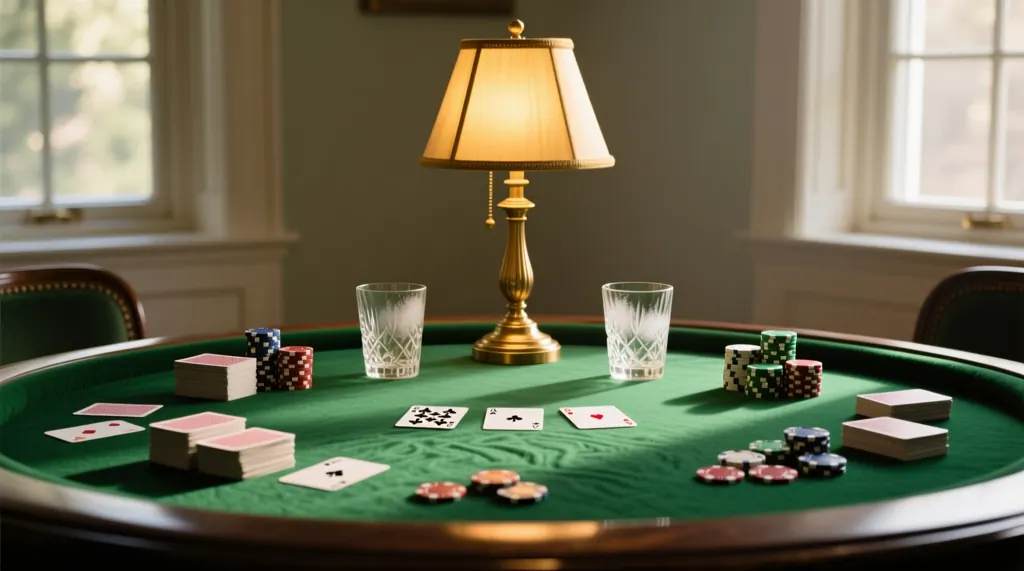
A good table is decided before the first card is dealt. Enough room for every player, light that reaches the centre without glare, a surface that stops cards from sliding and drinks kept safely off to the side remove almost every small annoyance that interrupts a long session. None of it is complicated, and all of it pays back over the hours a serious group spends at the table. This article sets out how to prepare a playing surface, why a felt cloth or tray helps, and the small touches that separate a table that works from one that fights back.
Setting Up a Proper Game Table
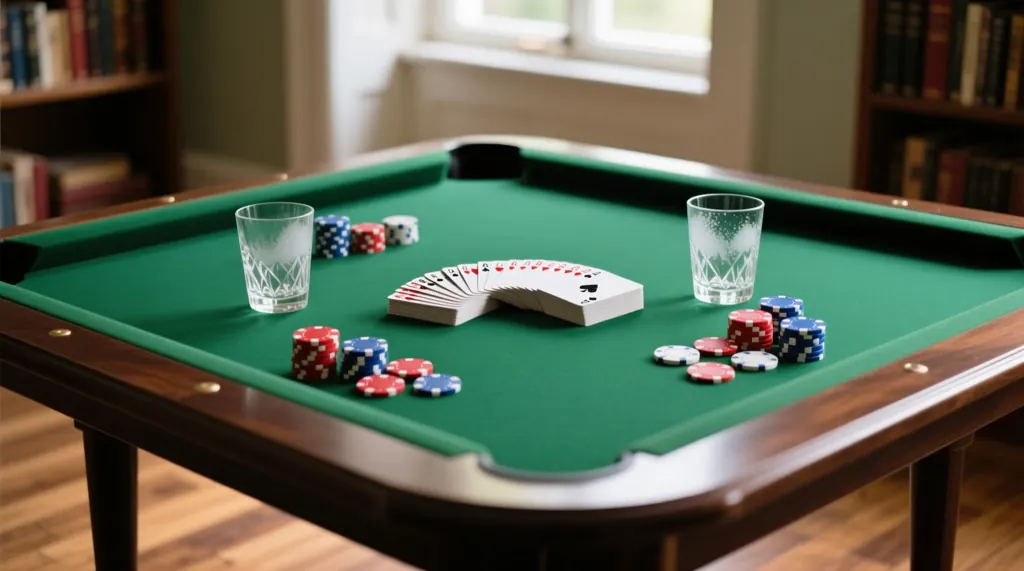
A good table is mostly a matter of removing obstacles before anyone sits down. Enough space for every player's cards and chips, light that reaches the centre without glare, a surface that does not let cards slide and a drink kept off the playing area cover nearly everything a group needs.
Small touches repay themselves over a long evening. A felt or cloth playing surface keeps cards from skidding, a coaster beside rather than on the board protects both, and a spare box for discards keeps the middle of the table uncluttered. A table prepared in this way lets the game carry the evening instead of the furniture.
Dice, Chips and Counters
Dice and chips do quiet work in every card and board game, and their physical qualities change how a session runs. Sharp, well-balanced dice rolled on a soft surface settle quickly and fairly, while rounded casino-style edges keep the roll lively. Cheap dice with soft corners are the usual culprit behind disputes about a lucky bounce.
Chips are just as practical. A set with consistent weight and a clear denomination stack without wobbling, count quickly at a glance and survive being scooped between hands. Counters of a single flat colour are fine for board games, but anyone who plays cards seriously will notice the difference a proper set makes to the pace of a table.
Storage, Inserts and Keeping Components Safe
Most damage to a game happens between sessions rather than during them. Boards stored flat rather than upright, cards kept in a firm box and small pieces bagged by type all prevent the slow warping, scuffing and scattering that ages a collection faster than play ever could.
A box that is pleasant to open gets opened more often. A simple insert, a few cloth bags and a labelled compartment turn a jumble of loose pieces into something that can be set out in a minute. The habit of packing away completely after each session is worth more than any clever storage gadget.
Table Etiquette for Serious Play
Gear and manners are closer than they look. Handling cards gently, not bending them while thinking and keeping drinks away from the felt are all acts of respect for the equipment and for the people sharing it, and a table where these habits hold is simply more enjoyable to play at.
The same goes for the quieter courtesies: announcing a roll clearly, keeping a tidy stack of chips and putting pieces back where they belong at the end. None of it is fussy, and all of it tells the other players that their evening and their equipment are being looked after.
What Makes a Good Deck of Playing Cards
A deck is the cheapest piece of equipment on the table and the one players handle most, so its finish decides how an evening feels. Stock weight, a low-friction coating and cleanly cut edges separate a deck that shuffles smoothly for hours from one that clumps, bends and betrays the card at the back of the hand.
It is worth learning to read a deck by touch rather than by price alone. A firm snap when the cards are riffled and a crisp, even border on every face are reliable signs of good manufacture. Decks that fan without sticking and spring back flat will still be pleasant in a year of regular play.
Building a Shelf You Will Actually Use
A shelf of gear, like a shelf of games, works best when every item earns its place. One dependable deck, one set of dice that rolls straight, a tidy set of chips and a couple of storage solutions handle almost every evening a grown-up table meets, without turning the room into a stockroom.
The discipline is to add slowly. Use what you have until you can say exactly what is missing, then buy for that gap rather than for the newest thing on a shelf. Equipment chosen this way stays in use for years, and the space it takes up stays manageable.
Clubs, Tournaments and Organised Play
Stepping from a kitchen table to organised play changes what equipment means. A club night asks for gear that travels well and stands up to a room full of strangers, and it rewards players who keep their set clean, complete and ready to be used by anyone at the table.
Tournaments also bring a useful discipline to how a player handles the pieces. Shuffling cleanly, rolling on the marked surface and keeping chips stacked and counted are courtesies that keep a long event moving, and they are the same habits that make a home table pleasant to sit at.
Caring for Cards, Boards and Pieces
Cards and boards age in predictable ways, and most of the damage is avoidable. Greasy fingers, sunlight and heat bend and stain cards, while a board left in a warm room warps along its fold. Clean hands, a shaded shelf and a habit of closing the box properly prevent nearly all of it.
When something does wear, a small repair kit is more use than a replacement. A little archival tape, a spare set of sleeves, a cloth bag for loose counters and a note of which piece goes where will carry a well-used game through many more sessions without spoiling its feel.
- Give every player room for their cards and their stack.
- Use a soft surface so cards do not slide and dice settle.
- Light the centre of the table from above, not across it.
- Keep drinks on coasters beside the play area, never on it.
- Set out a discard box or bowl to keep the middle clear.
- Have a spare deck and a set of dice within reach.
| Table element | What good looks like | What it prevents |
|---|---|---|
| Surface | Felt or cloth playing layer | Cards sliding during a hand |
| Space | Room for cards, chips and a drink | Constant shuffling around |
| Light | Overhead and even | Glare and misread cards |
| Drinks | Coasters beside the play area | Spills on cards and boards |
| Storage | A tray or box for discards | A cluttered centre of the table |
Prepare the table properly once and the evening looks after itself. With space, light, a soft surface and drinks kept clear, players can give their attention to the game rather than the furniture, and the session runs as long as anyone wants it to.