Following Game News and Release Calendars
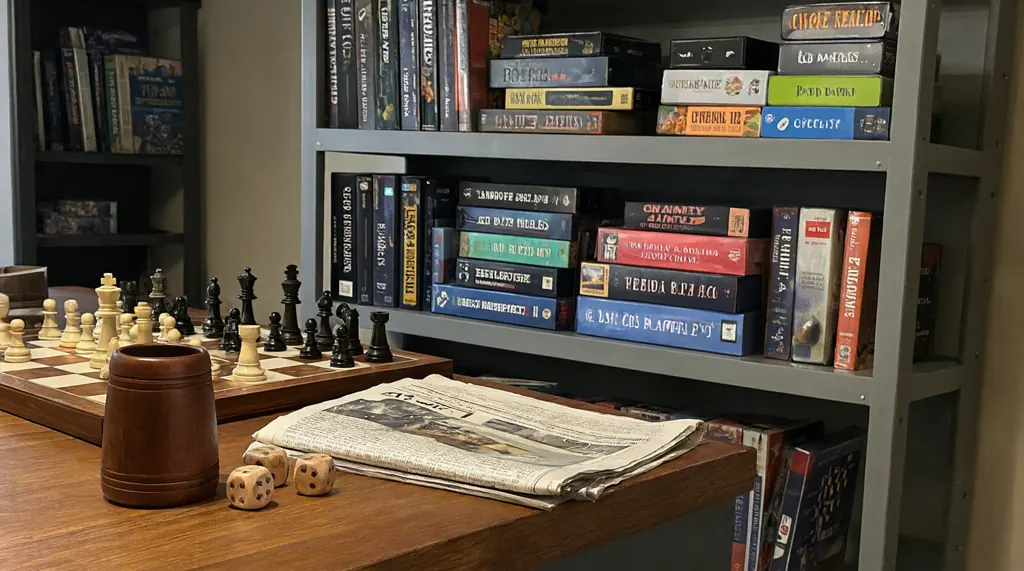
Game news arrives faster than anyone can read it, and the temptation to keep up with all of it is exhausting and pointless. The great majority of announcements do not affect what you will play next month, and treating every one as urgent turns a relaxing hobby into a chore. This article looks at a calmer approach: what is genuinely worth following, how often to check, and how to tell the difference between a release that matters to you and one that only matters to the people selling it.
Following Game News and Release Calendars
Release calendars are useful but only in moderation. Watching every announcement turns a hobby into a queue of things you have not bought yet, while checking once a month is usually enough to catch what actually matters. A simple bookmark list beats a feed that refreshes every few minutes.
A better habit than chasing news is to follow a handful of writers rather than a single large site. Individual reviewers tend to stay consistent in taste, and their occasional round-ups will surface the genuinely interesting releases without the noise that surrounds a launch week.
Avoiding Ads, Clickbait and Dead Ends
Some websites are built to keep you clicking rather than to help you decide. A page that breaks a short opinion into ten slides, hides the answer behind a video or covers the text with pop-ups is telling you what it values. The information you came for is usually available somewhere calmer for free.
Dead links are the other quiet frustration of older hobby sites. A decade-old page may still rank well while its images and downloads have long since vanished, so it is worth checking the date at the top before you trust a recommendation. If the page is old but the advice is solid, it is still worth reading; if it is old and broken, move on.

Building a Personal List of Sources
Most people eventually settle on a short list of sites they trust and largely ignore the rest. That list usually mixes one place for news, one for detailed written reviews, one channel for video and one friendly community for quick questions. Four good sources are worth more than forty forgettable ones.
Write the list down somewhere you will find it again, whether that is a browser folder or an old-fashioned note on the wall. Relying on search results every time means you are shown whatever ranks highest rather than whatever suits you, and the difference between those two things is often considerable.
How to Tell a Trustworthy Review Site
A reliable review site shows its work. It tells you how long the writer spent with the game, who they played it with and what they did not enjoy, rather than simply declaring the product good. When a page explains its method and admits its limits, you can judge the conclusion instead of taking it on faith.
Signs of trouble are just as easy to spot once you know them. Endless enthusiasm with no criticism, identical wording across several pages and a wall of links to buy something are all hints that the text exists to sell rather than to inform. A site that sometimes says a game is not worth your evening is usually the one worth trusting.
The Vocabulary of Game Websites
Every hobby grows a private language, and games are no exception. Terms such as player count, play time, weight and downtime appear on almost every review page, and knowing them turns a confusing listing into a quick summary you can scan in seconds. Weight, for instance, simply describes how complex the rules are.
Downtime is the other term worth learning early. It measures how long you wait between your own turns, and it explains why two games of similar length can feel completely different. A long game with little downtime passes quickly, while a short game with long waits can feel endless.
Video Reviews and Written Reviews Compared
Video is unbeatable for showing how a game looks in motion. Watching a short clip of play reveals the pace, the size of the table footprint and how much talking happens between turns, none of which a paragraph can convey. For anything you intend to play with other people, seeing it move is genuinely useful.
Written reviews win when you want to search, compare or check a detail later. Text can be skimmed, bookmarked and quoted, and it usually goes into more depth about rules and strategy. Most experienced players use both: a video to decide whether a game is interesting at all, and text to work out whether it fits their group.
Where Reviews Meet Community
The most useful pages on a review site are often the ones underneath it. Reader comments and forum threads tell you how a game behaves after ten plays, which is exactly the point at which a polished review stops being helpful. That is where you learn about the rule everyone forgets and the piece that always goes missing.
Communities also answer the small practical questions that reviews ignore, such as whether a game fits a narrow table or whether a certain age group really can manage it. Asking politely in a busy thread usually brings three or four answers within an hour, each from someone who has actually played.
Reading a Review: What Actually Matters
The reliable parts of a review are rarely the verdict paragraph at the end. Far more useful are the concrete details: how many people can play, how long a session runs, how much luck is involved and how heavy the rules feel. Those facts let you decide for yourself whether the game suits your table.
It also helps to know what the writer values. Someone who loves deep, slow strategy may dismiss a light party game that would be perfect for your group. Finding two or three reviewers whose tastes resemble yours is worth more than reading twenty opinions written for a general audience.
- Check release calendars once a month, not every day.
- Follow a few individual writers instead of large sites.
- Ignore launch-week hype and wait for second opinions.
- Keep a short wish list and revisit it after a few weeks.
- Note which announcements actually reached your table.
- Unsubscribe from anything that mostly sends advertising.
| Source type | How often to check | Why |
|---|---|---|
| Release calendar | Monthly | Gives a useful overview |
| Individual reviewer | When they publish | Consistent taste |
| Community forum | Weekly | Real play experiences |
| News aggregator | Rarely | Mostly promotional noise |
| Video channel | Monthly | Good for a sense of pace |
The best news habit is a slow one. A monthly look at what is coming, plus a couple of writers you enjoy, will keep you informed better than any feed, and will leave you far more time to actually play.